

With one in four people over the age of 25 expected to experience a stroke in their lifetime, it’s no wonder Stroke Aotearoa NZ is encouraging us to look out for the signs of stroke in ourselves and the people around us.
While most of us imagine stroke being something affecting the elderly, it can happen at any age including babies and children. Reassuringly though, 90% of strokes are preventable by reducing risk factors. Some factors that increase your risk of stroke include high blood pressure, physical inactivity, poor diet, and smoking, all of which can be monitored and improved to reduce your risk in future. If we can control our blood pressure, eat less salt, and engage in a healthy lifestyle, we can reduce our risk.
What exactly is a stroke? It is when there is a sudden interruption of blood flow to part of the brain, causing the brain to stop working and eventually damaging brain cells. The event that causes the interruption of the blood flow is often a blood clot or a burst blood vessel. The longer the brain is cut off from the usual flow of blood, the more damage is done. Prompt treatment greatly increases the chance of survival and the likelihood of a successful recovery. Every fifteen minute delay in treatment reduces the chance a person has of being able to live independently post-stroke. In fact, stroke is a leading cause of adult disability in New Zealand and the second leading cause of death. So, our goal should be to not only help prevent stroke in ourselves, but also to be able to identify the signs of stroke in our friends, family, and workmates in order to raise the alarm quickly to give them a fighting chance at recovery.
Stroke Aotearoa New Zealand outlines a very simple way to remember the signs of stroke:
F.A.S.T
• Face drooping
• Arm weakness
• Speech difficulties
• Take action – call 111 immediately
And just as the acronym says, you should act fast!
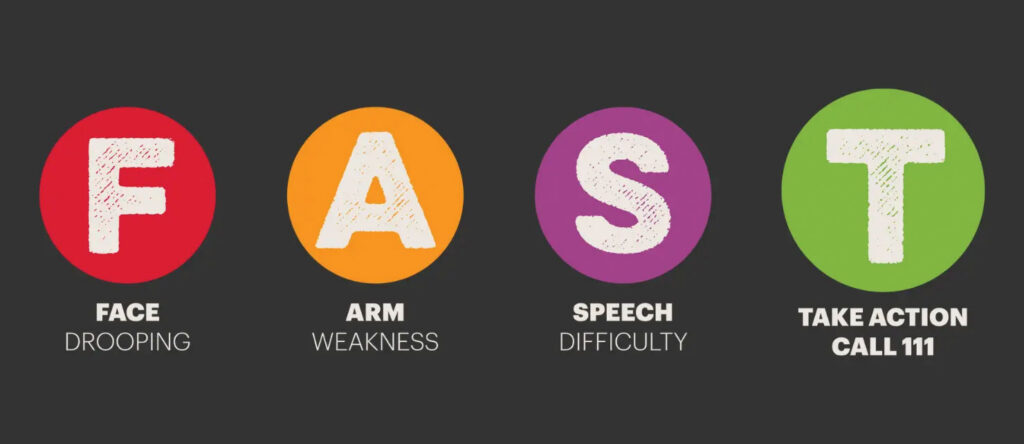
If you experience one of these signs or notice someone else is experiencing one of these signs, don’t wait or think “it’ll pass”. Don’t wait for another sign to become evident. Acting quickly is vital and could save a life.
The sooner medical treatment begins, the lower the risk that permanent brain damage occurs and there is a better chance of an excellent recovery. In some cases, it means that damage can be completely reversed.
Calling 111 is the best way to get medical attention as it means
an ambulance will be sent to help, and the first responders can assess the situation and prime the hospital to prepare for the patient’s arrival. This helps ensure they are triaged appropriately and receive treatment quickly.
Stroke Aotearoa NZ, our national charity dedicated to stroke, wants all Kiwis to know how they can reduce their risk of stroke and recognise the signs of stroke. They have designed free training and resources to provide everyone with the skills and knowledge to understand what a stroke is, how to recognise the key signs of stroke, and how to share the F.A.S.T. message. They even have a free Workplace Toolkit designed for workplaces to hold their own F.A.S.T. sessions as part of their wellness initiatives. If you’re interested in accessing these resources, reading inspiring stories from people who used the F.A.S.T. message to save a life, or support the foundation’s programmes to assist New Zealanders affected by stroke, please visit Stoke Aotearoa NZ on www.stroke.org.nz
Remember to act F.A.S.T!