

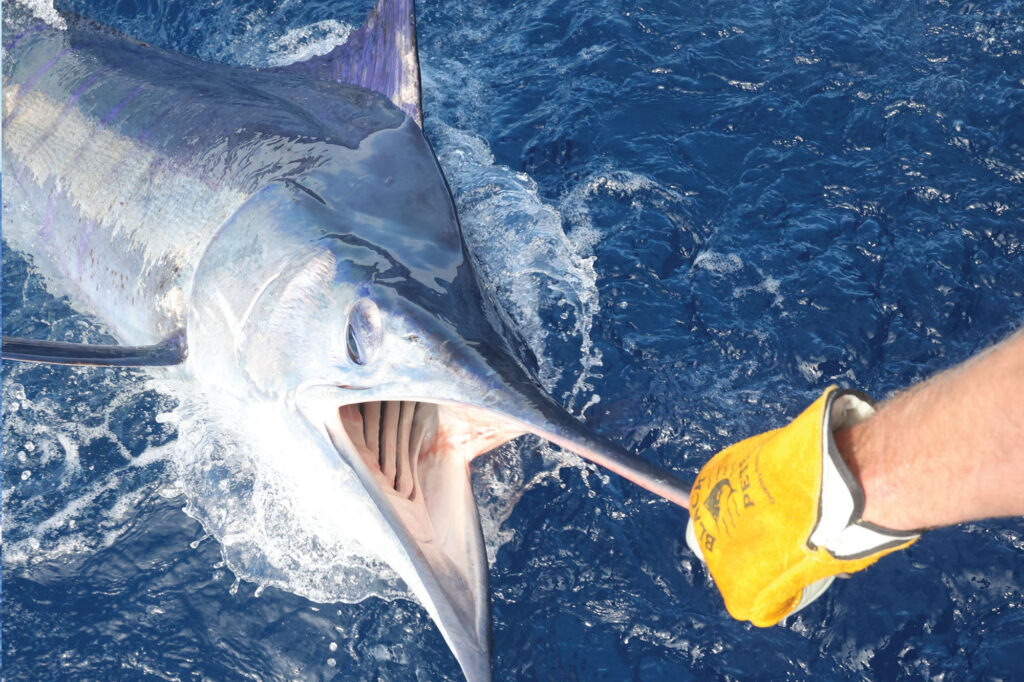
Striped marlin are large, pelagic billfish that seasonally migrate to our coastal waters. New Zealand has a reputation for holding the largest striped marlin in the world, with Kiwis dominating world records for the species.
Māori name: Takaketonga
Scientific name: Tetrapturus audax
All-tackle NZ record: 224.1kg
Where to catch
Striped marlin are caught off both coasts of the North Island and the upper South Island – primarily in the area between New Plymouth on the west coast, up around the top of the country, and down to Napier on the east coast. They are usually caught in blue water depths over 80m but regularly stray into shallower, more turbid coastal waters according to the availability of prey.
The process of finding marlin starts before you head out on the water. Check out recent reports, which fishing club sponsor grids have been fruitful, and who’s been out recently. Also, keep an eye on the sea-surface temperature, current, and chlorophyll charts online to identify where fish might be holding. Current lines or mixing zones are a great area to hunt down striped marlin. These areas can be distinguished by different surface conditions (rippling or smooth water), visible colour changes, temperature changes, and birds and baitfish holding in the area.
When to catch
Most striped marlin anglers target their efforts between late December to late May, although fish have been caught throughout the year, so it appears at least a few fish stick around our waters year-round. Stripies feed throughout the day and often their activity peaks over the change of tide. Many anglers believe the best catch rates are just before the full moon.
How to catch
Striped marlin are opportunistic feeders of squid and many fish species such as mackerel and saury. In New Zealand, anglers often need to cover a large amount of ground to find stripies, so trolling lures is a popular method. However, when the stick-faces show up in large numbers, using livebaits can prove deadly.
Trolling with lures
Although there is a range of techniques on how best to raise and hook striped marlin while trolling, many New Zealand anglers run a staggered spread of four small-medium lures featuring a selection of different colours and head-shapes, in conjunction with teasers such as dredges and daisy chains. With the finicky feeding nature of striped marlin, it is crucial to rig lures with very sharp hooks.
Livebaiting
For slow-trolled livebaiting, most boats run one or two livies at a time. They can be set at different distances from the boat, often from the outriggers, or on a downrigger to provide some spacing. Common livebaits include skipjack tuna, kahawai, koheru, jack mackerel, and slimy mackerel. The gear should be set with a light drag or with a decent slack line drop-back in the outriggers to allow the fish to swallow the bait before the hook is set.
If you’re looking to catch your first stripey this season, or want to brush up on your knowledge, www.fishing.net.nz has you covered!