
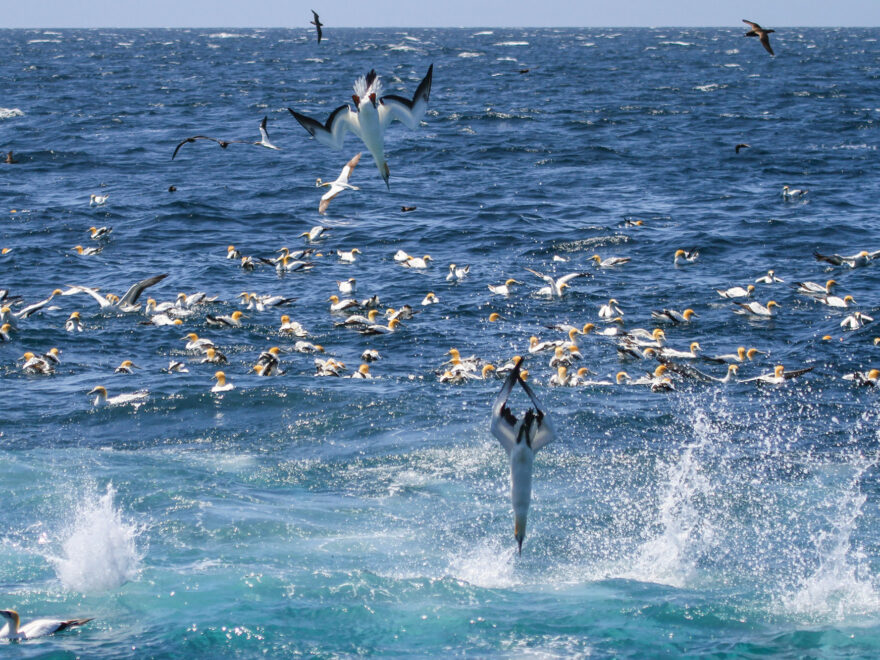
Chasing spring workups is one of the most exciting ways to fish in areas like the Hauraki Gulf, with gannets, dolphins and hungry predators combining to create fast-paced action. But it can also be frustrating and fuel-intensive if you spend the day chasing birds that lead nowhere. A little planning and a few simple tactics can make all the difference.
Before heading out, think about the conditions that influence feeding activity. Tidal movement is a major factor, with fish often feeding hardest during the last hour before the tide slows around the change. Activity also tends to build in the days leading up to the new and full moon, although many anglers find the fishing can actually be slow on the exact moon phase. Many anglers swear by ‘bite time’ calendars – most of which reflect the solunar calendar, which considers the moon’s position relative to the earth. Keeping an eye on local reports is worthwhile, but remember that online information should be taken with a grain of salt!

Once you’re on the water, your job is to find the gannets. During spring, they’re feeding chicks, so they’re on the hunt every day. Starting near a gannet colony can give you an early clue, as birds leaving the colony will often head straight towards the day’s action. Their behaviour is revealing, too. Birds flying high and circling have usually found bait, while those flying low and purposefully are often racing towards an active workup. On the other hand, birds simply meandering along, riding the wind, aren’t always worth following.
Dolphins are another excellent sign, as they work alongside the birds to herd baitfish. Bryde’s whales are also regularly associated with workups in the Hauraki Gulf, so spotting one is a good indication you’re in the right area. Binoculars are invaluable for locating distant bird activity, and once you’ve found fish, keep scanning the horizon as the action can shift surprisingly quickly.

When you reach a workup, hooking fish is often the easy part. If kahawai become a nuisance, heavier jigs can help get down to the snapper and kingfish beneath them. It’s also worth having a speed-jig or livebait outfit rigged and ready in case kingfish suddenly appear. On quieter days, downsizing to smaller microjigs, softbaits or slider-style lures can make a big difference. And if there are no obvious workups at all, don’t give up – long drifts through likely areas often produce snapper that are grazing over the seafloor.
Finally, fish responsibly. Snapper caught from typical workup depths of 30-50 metres often suffer fatal barotrauma if released. Rather than catching fish you don’t intend to keep, take what you need for a feed, then move on to something else.
Words & Images by NZ Fishing News
Find out more at fishing.net.nz